2019–2024
Unkai → Iwafune
Cloud platform evolution and rebrand
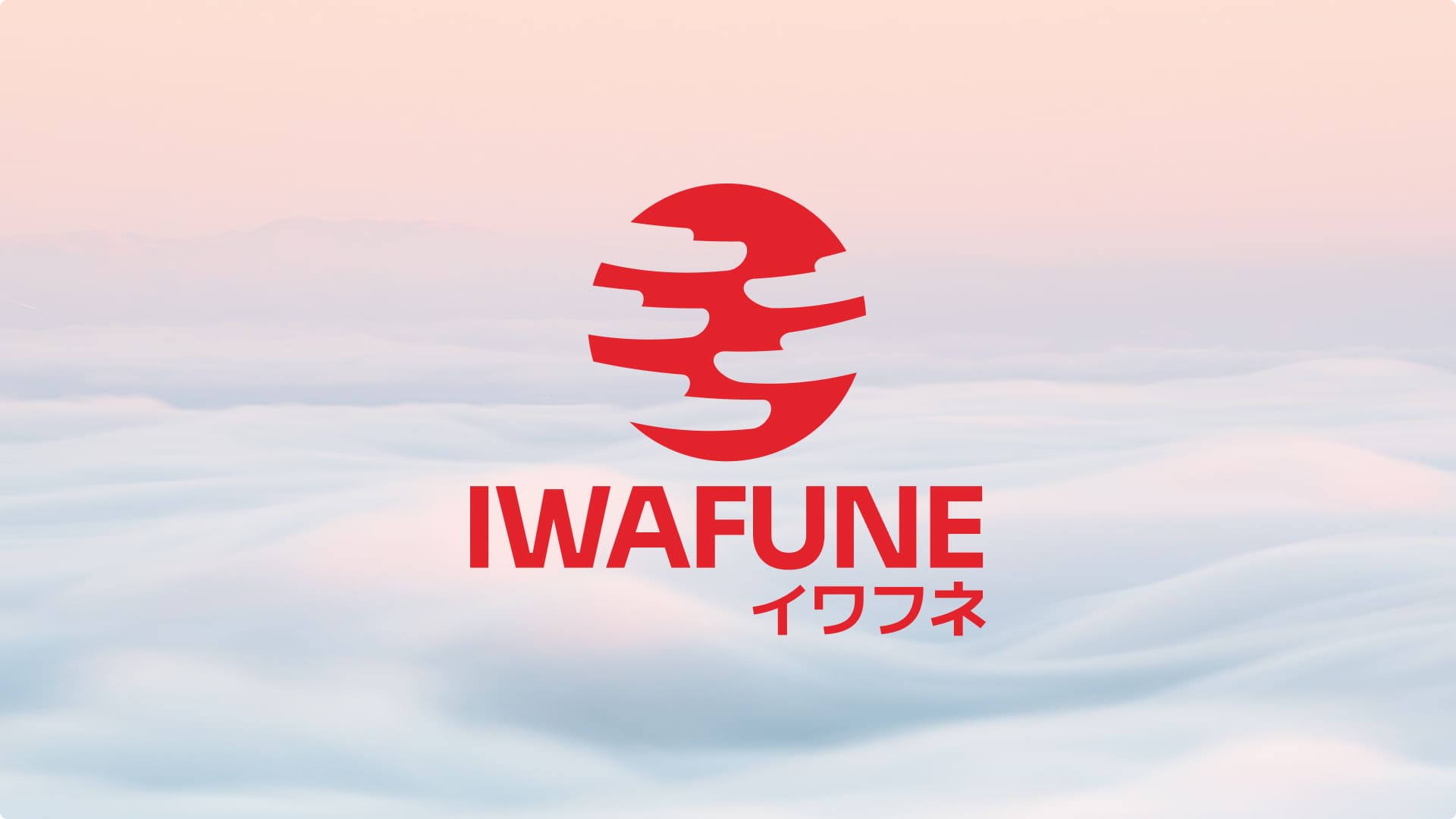
Creating the brand, name, and strategic positioning for Soramitsu's enterprise blockchain platform, from initial concept through rebrand, turning open-source infrastructure into a packaged product for system integrators and service providers.
Context
In 2019, before joining Soramitsu full-time, I was brought in as an external advisor alongside my business partner through our boutique fintech/crypto advisory firm. We were engaged by Soramitsu's CEO to define business and product strategy, particularly on the enterprise side of the company, as the crypto market was in a cooling period during the 2019 bear market.
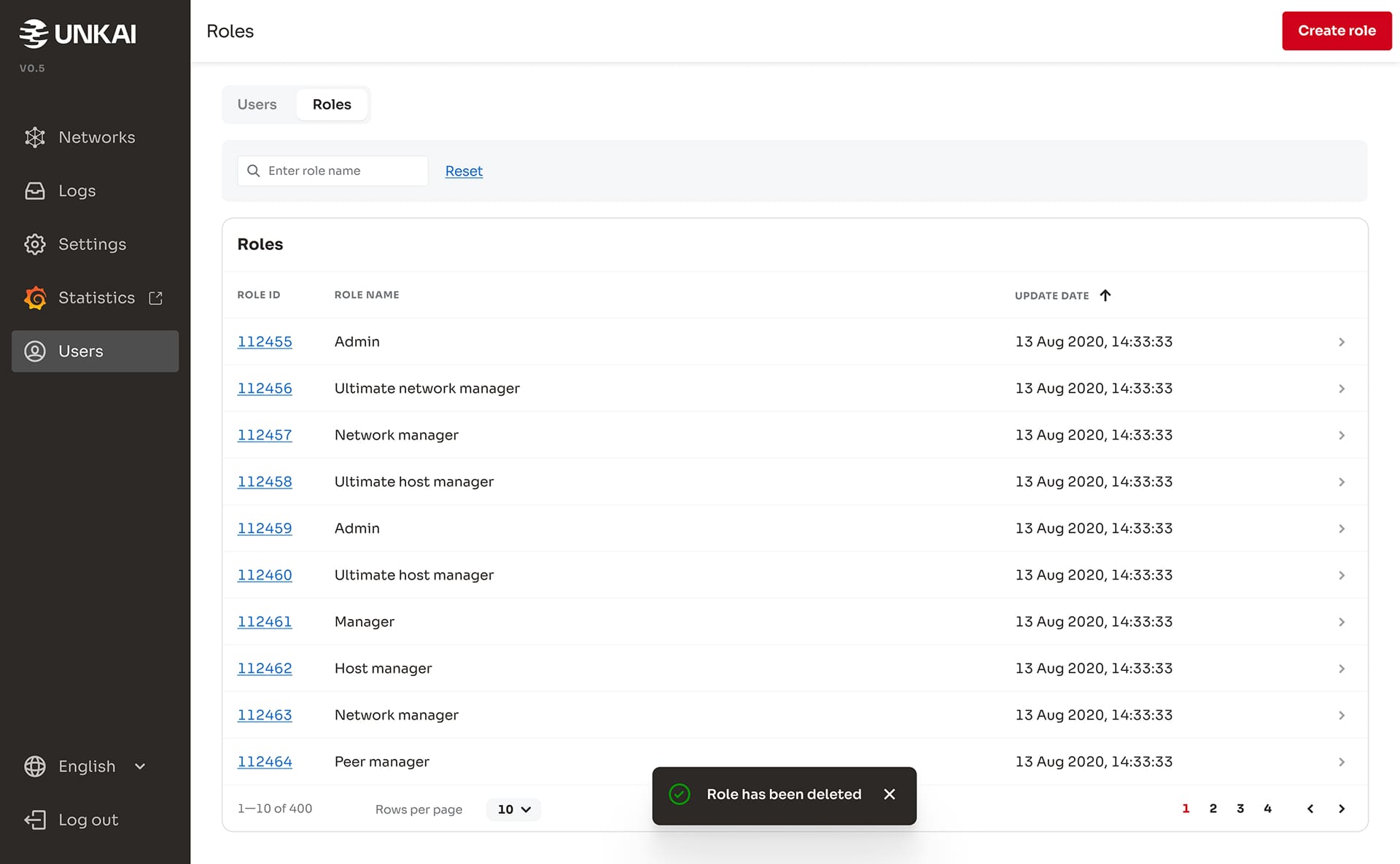
Our core strategic insight was straightforward: package Iroha as a product that could be sold efficiently at scale, essentially a blockchain-as-a-service (BaaS) platform. Instead of every central bank, enterprise, or system integrator needing to build from Iroha's raw open-source components, offer them a managed, modular platform with a GUI-based operational management console, pre-built application modules, and enterprise support.
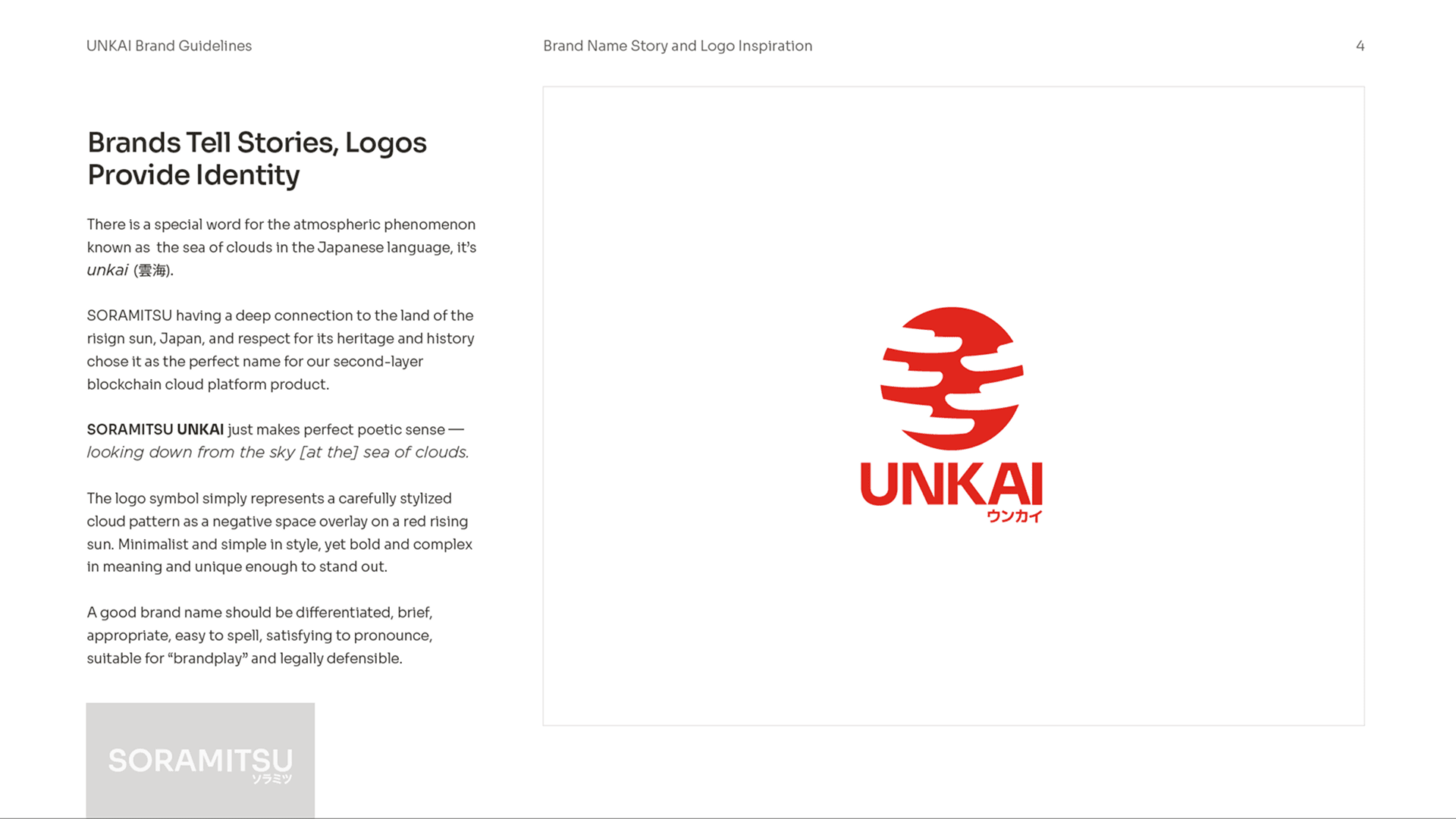
The Name: Unkai (雲海)
I named the product Unkai (雲海), which translates to "Sea of Clouds" in Japanese. The name worked on multiple levels: it evoked cloud computing and cloud-based infrastructure, it suggested scale and expansiveness (a sea, not a single cloud), and it carried the visual poetry of a natural phenomenon. The breathtaking view from a mountain summit looking down over a blanket of clouds stretching to the horizon.
For a platform designed to let enterprises spin up blockchain networks for any use case they needed, digital currencies, identity verification, supply chain tracking, digital certificates, "sea of clouds" captured the idea of many distinct deployments floating above shared infrastructure. Each cloud is its own blockchain instance; together, they form a landscape.
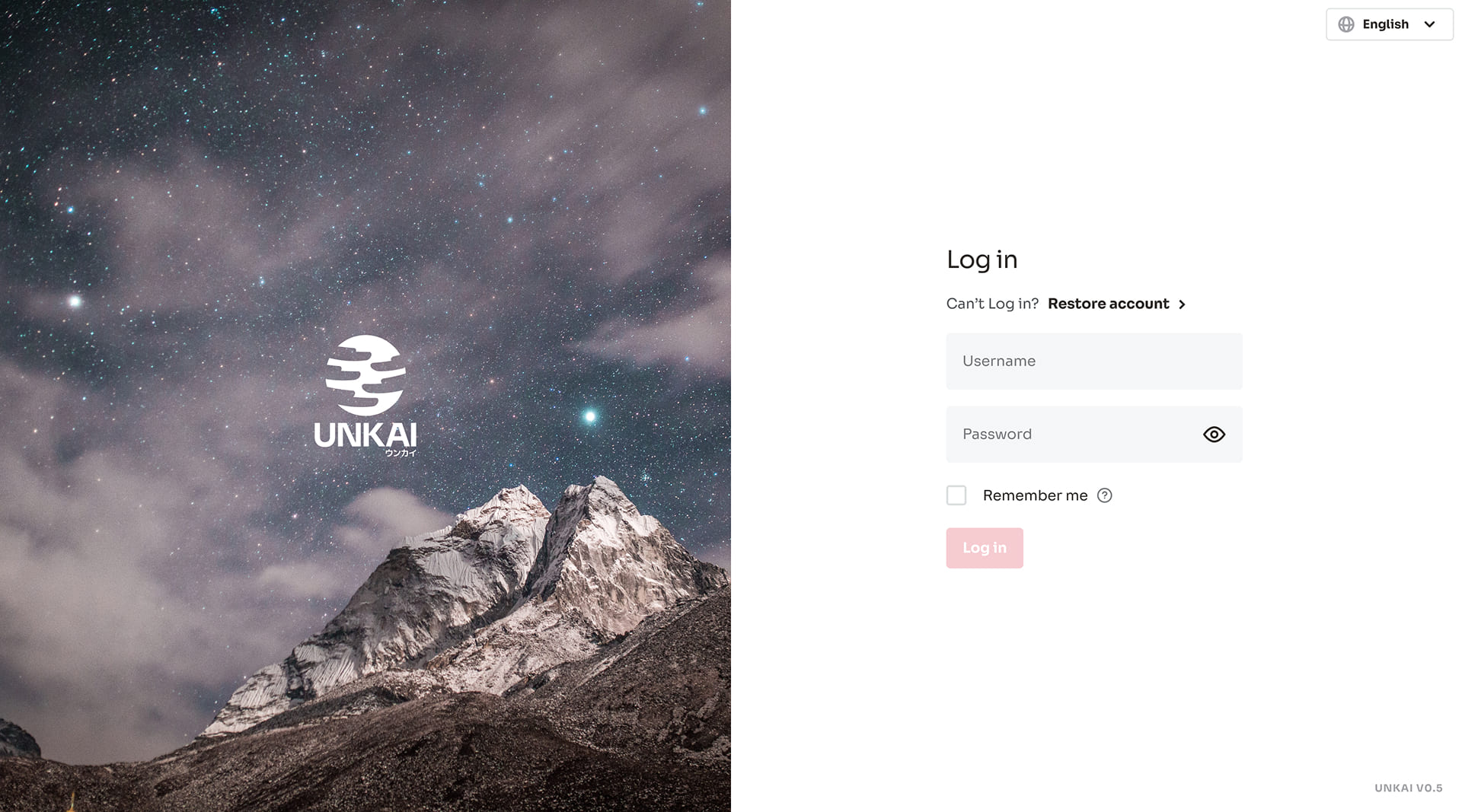
The Japanese language choice was intentional. Soramitsu is a Japanese company, the primary market was Japanese (and later Chinese) enterprises and system integrators, and the name echoed Soramitsu's pattern of Japanese naming. Unkai fit naturally into this family.
Brand Identity
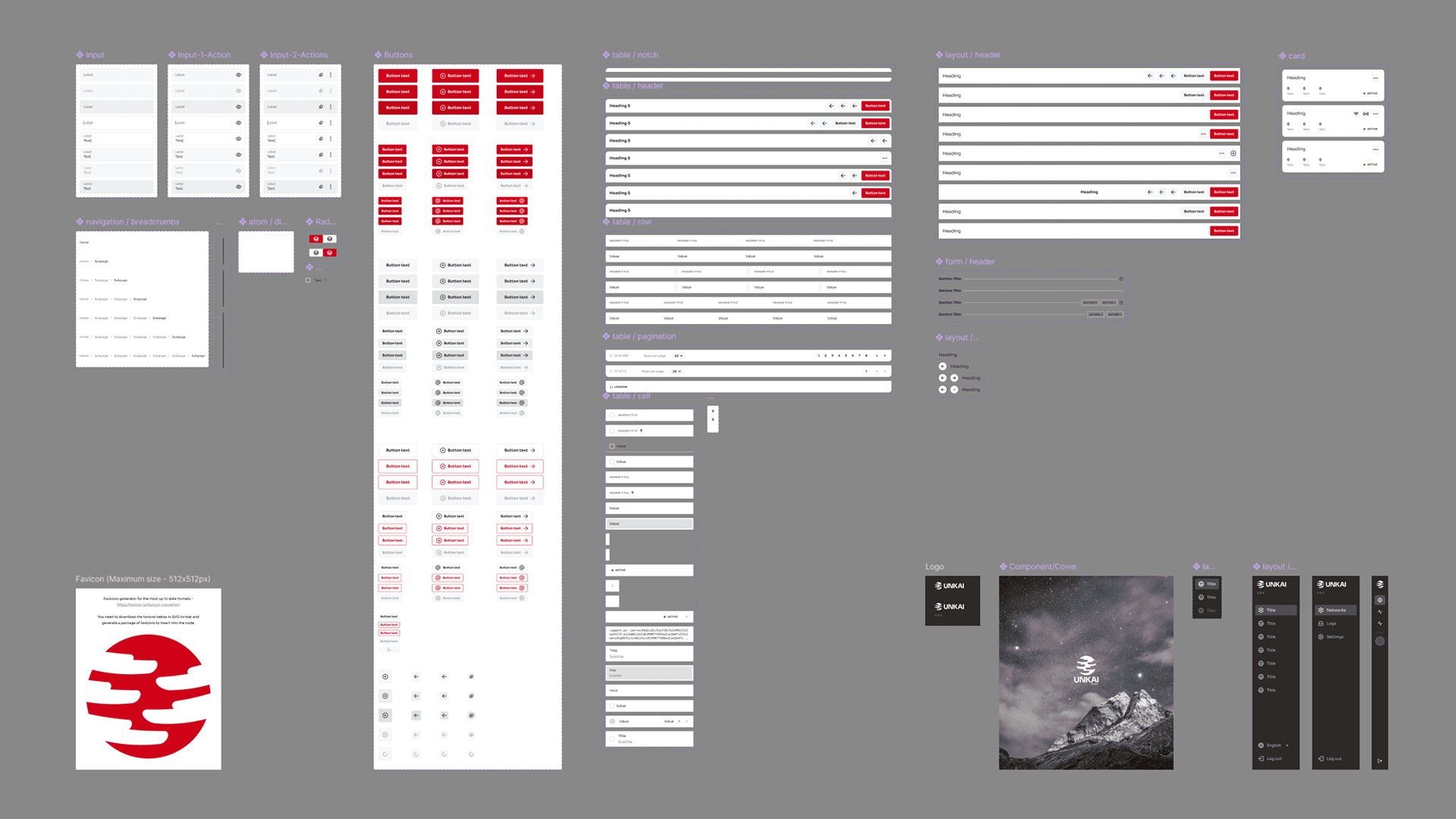
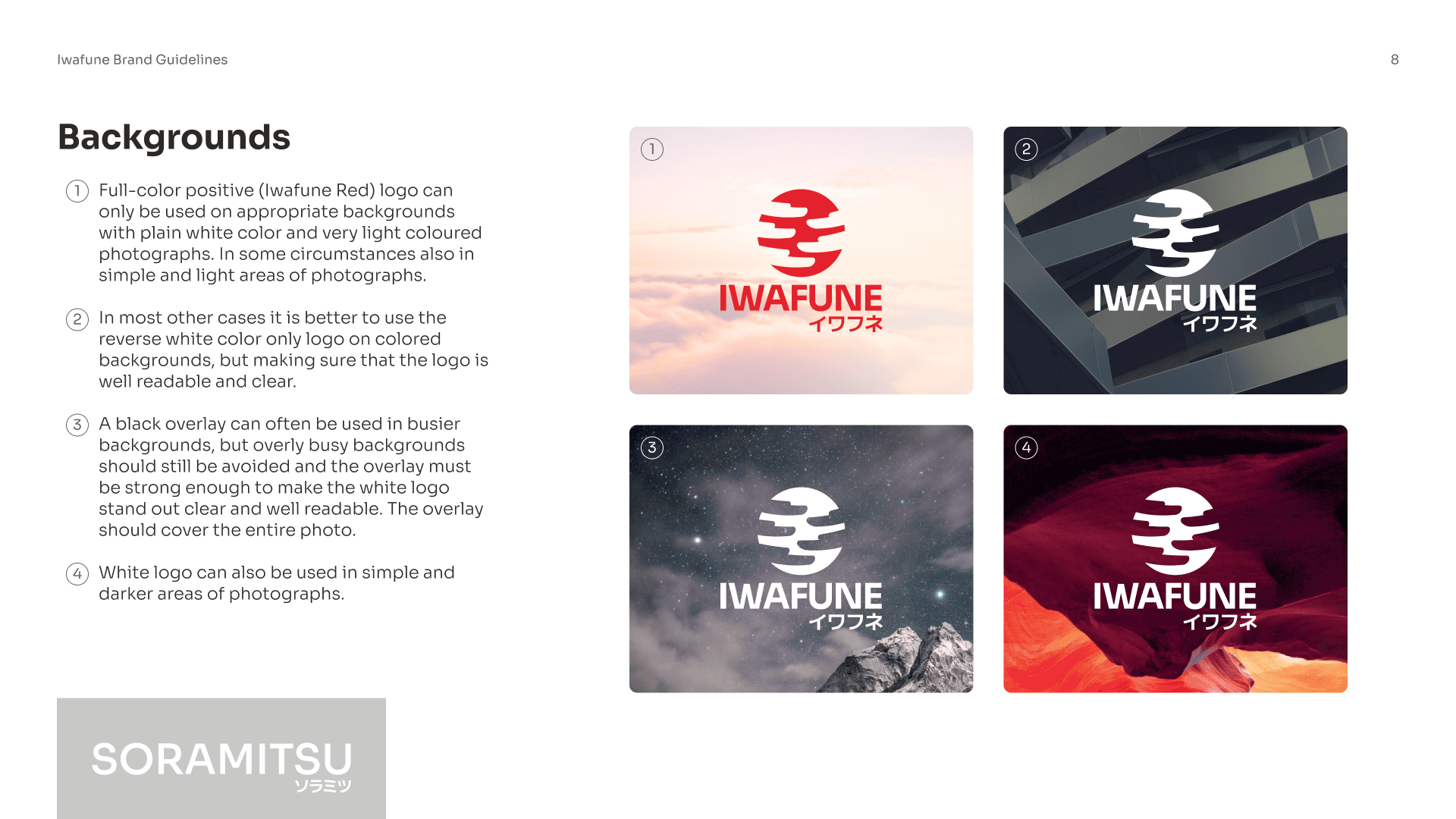
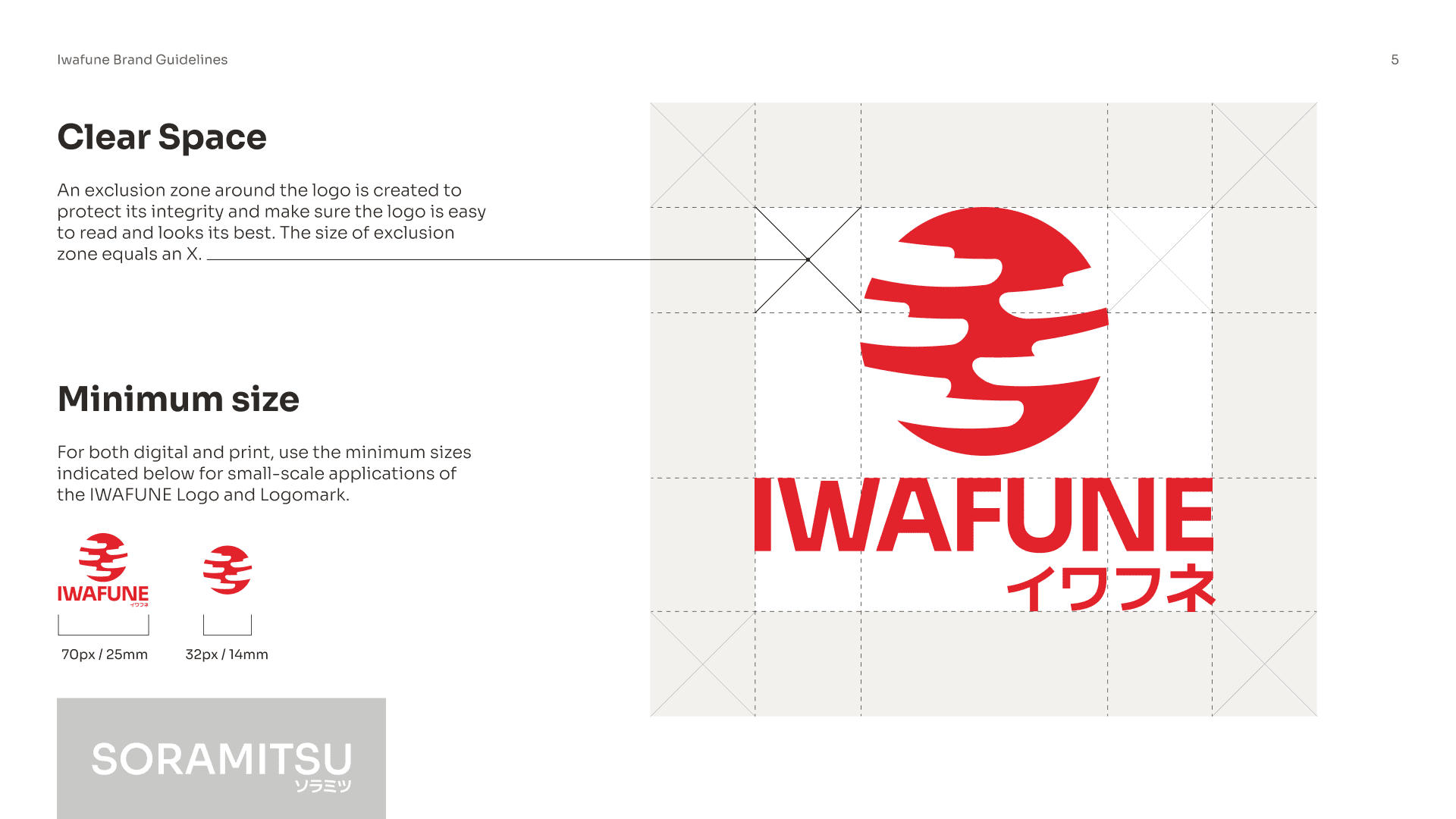
The Unkai logo is a red circle, a deliberate echo of Japan's national flag and Soramitsu's own red circular logomark, with five cloud shapes cut out as negative space. The clouds are organic, rounded forms that interrupt the solid circle, creating a mark that's simultaneously simple and distinctive.
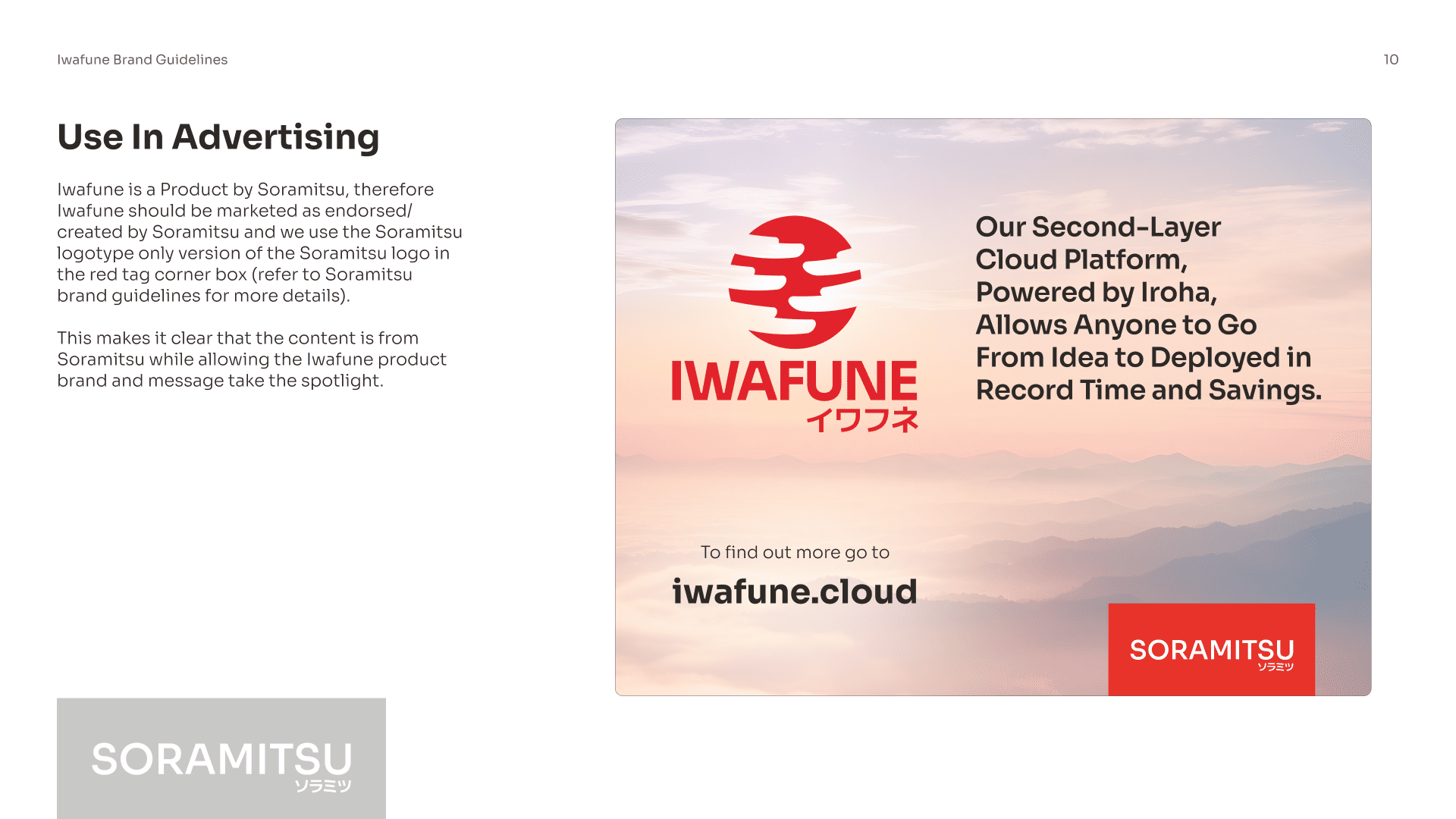
The brand palette anchors on the same Soramitsu red against dark backgrounds, paired with mountain photography that reinforces the "sea of clouds" concept, dramatic summit vistas with cloud formations stretching below.
The Rebrand: Iwafune (2023)
In October 2023, the product was renamed from Unkai to Iwafune. The trigger was practical, "Unkai" was already registered as a trademark in Japan for a technology service/product, creating potential legal complications.
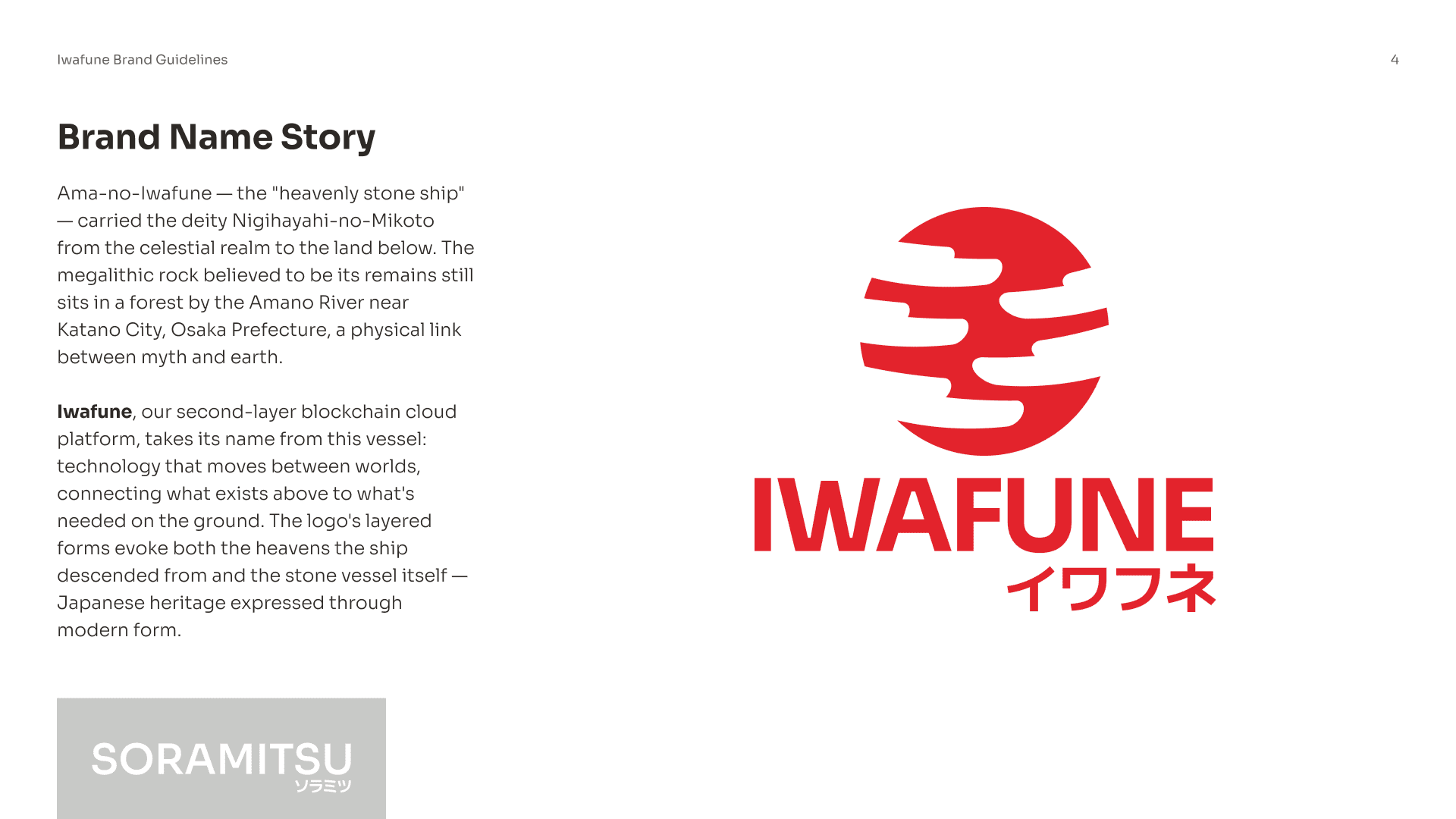
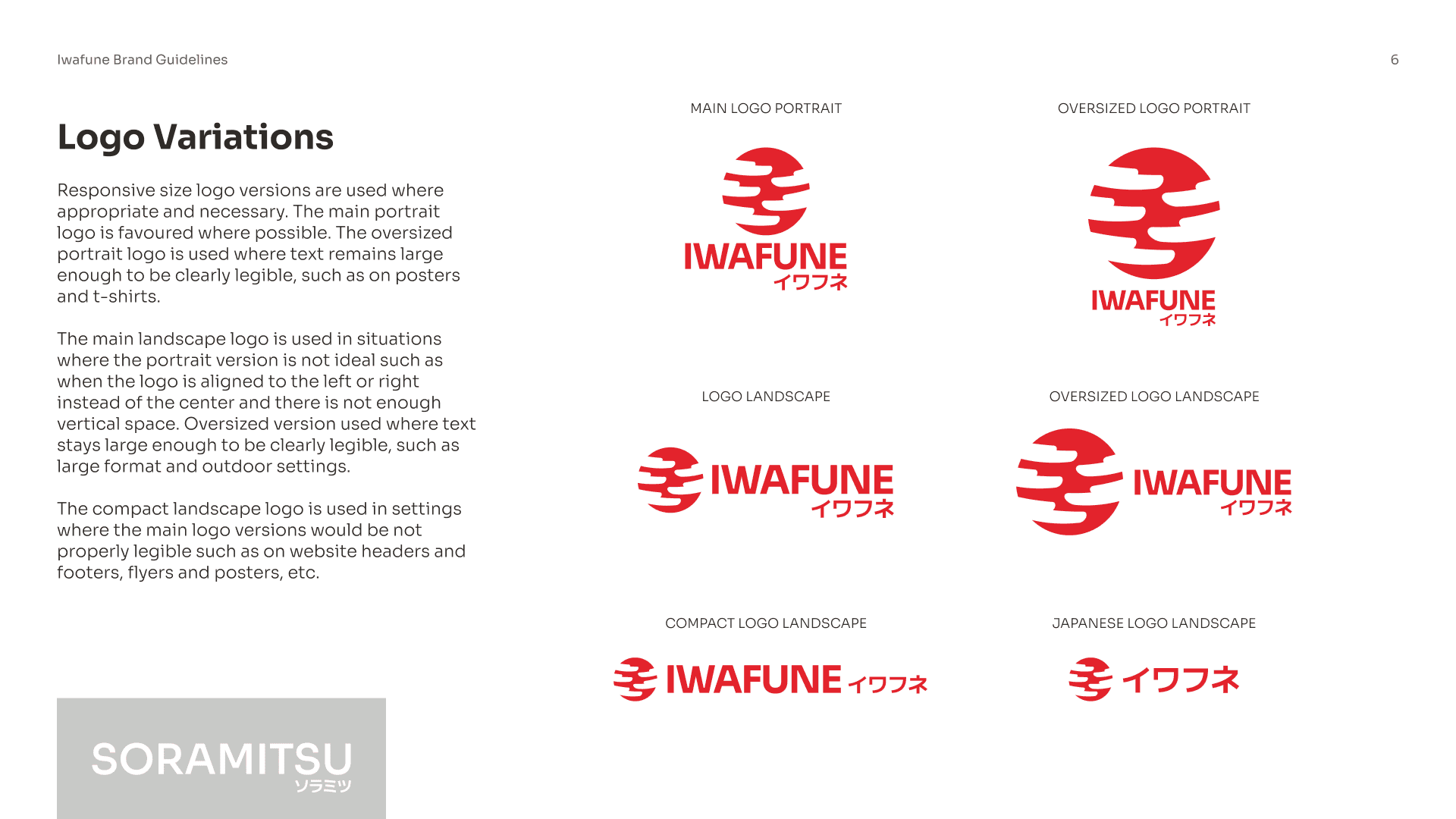
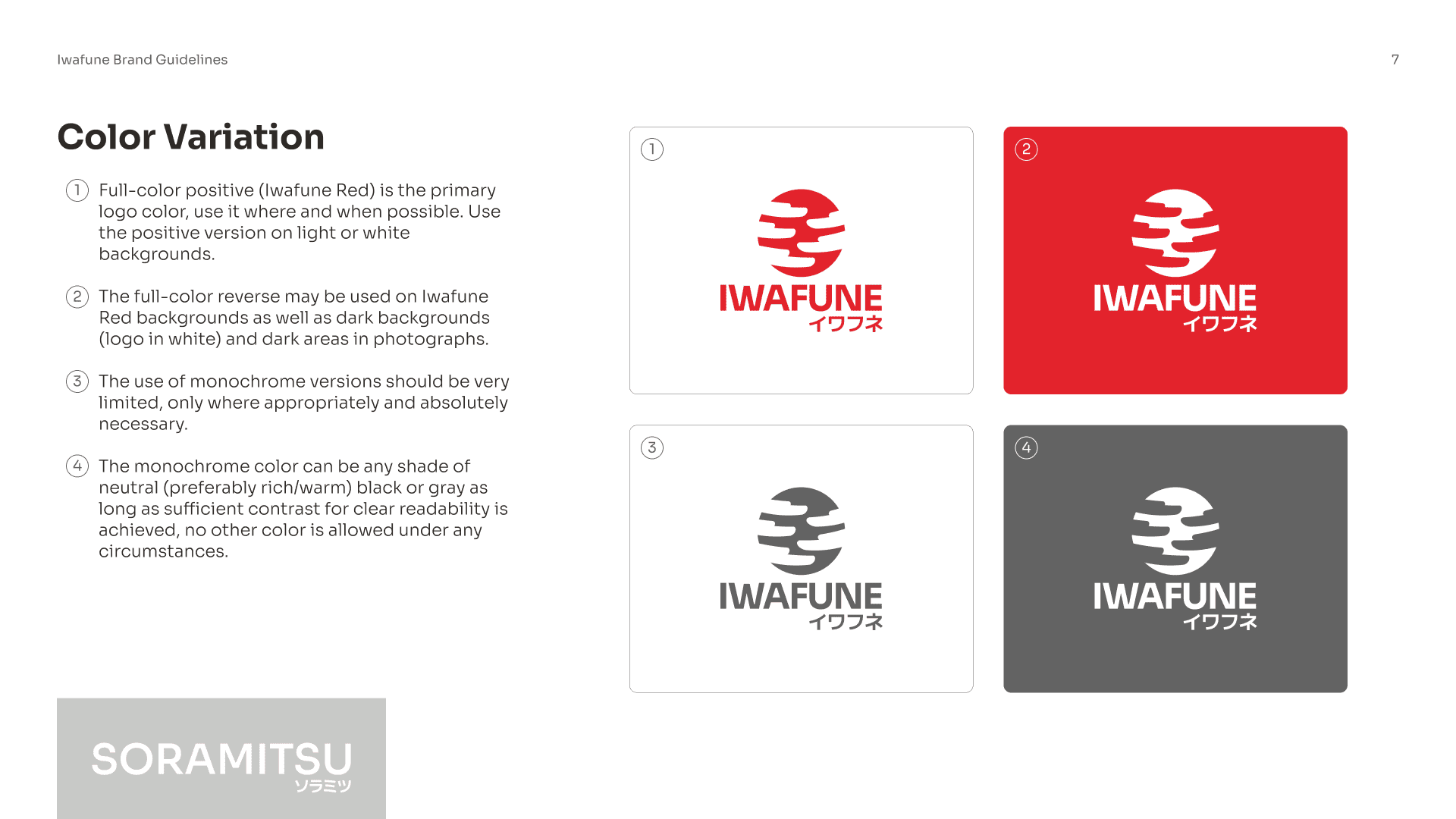
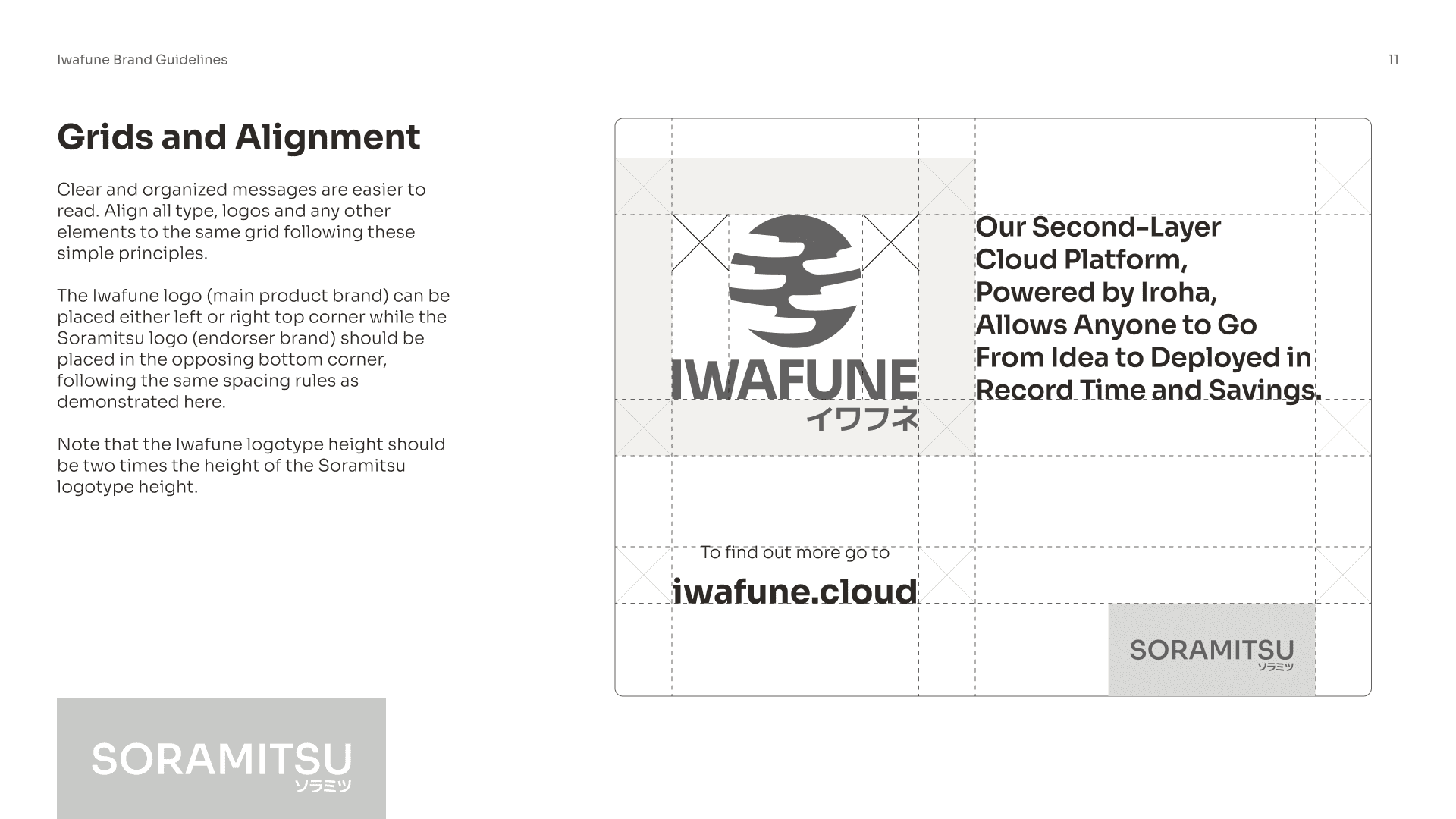
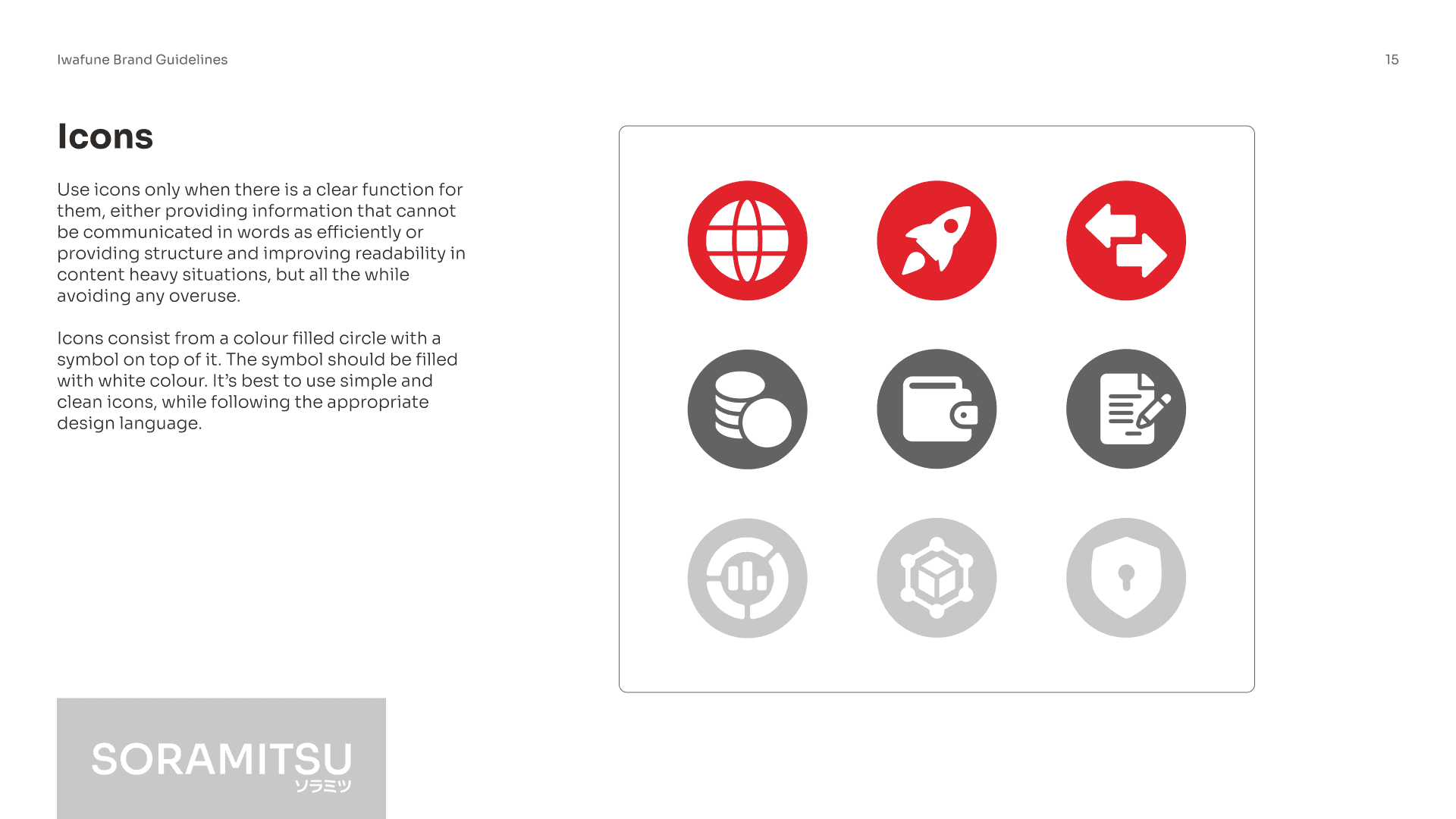
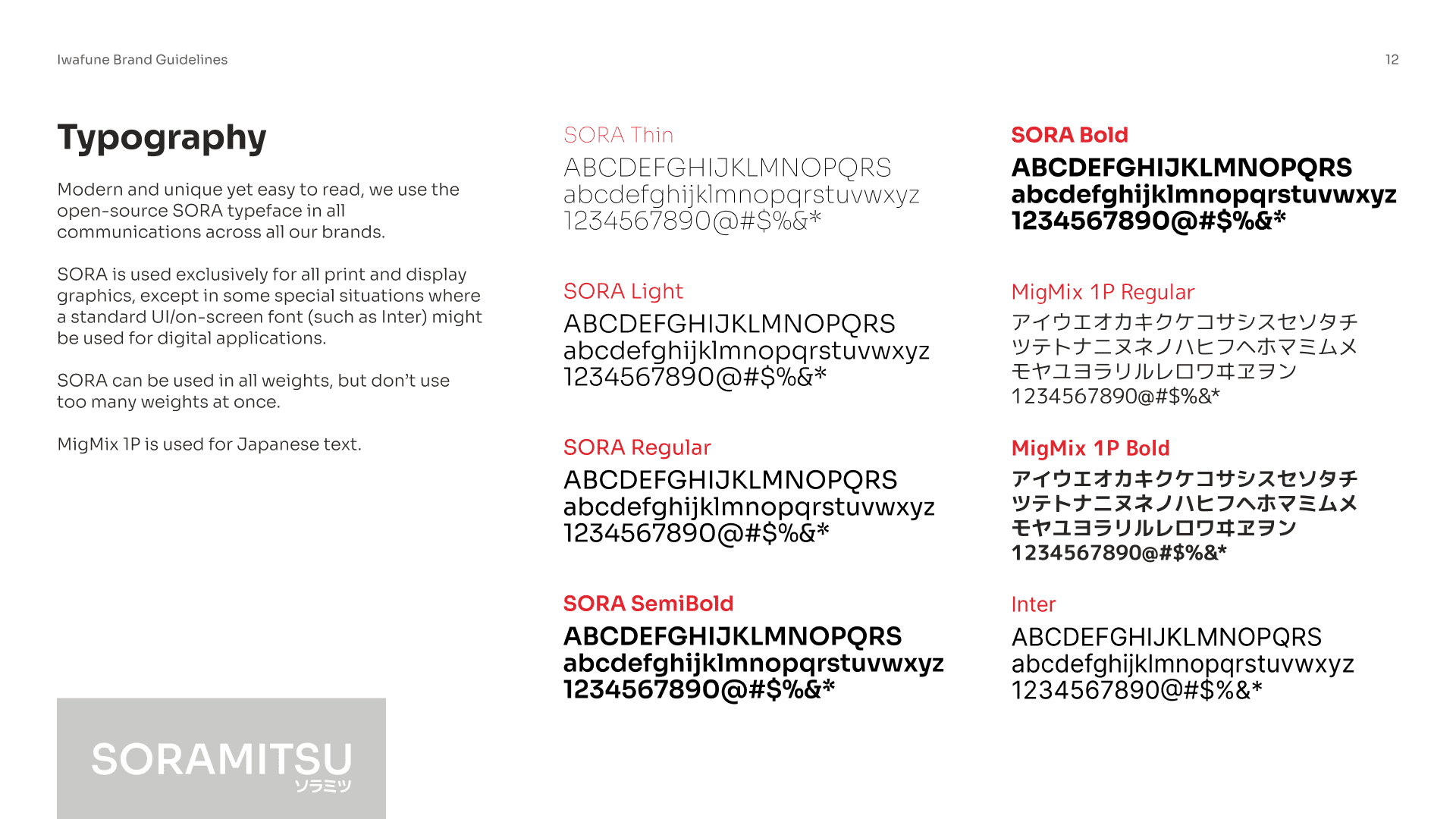
Iwafune (岩舟) translates to "rock ship". A name with roots in Japanese folklore. I recognized that the existing visual identity could carry the rebrand without requiring a full redesign. The five cloud/ship shapes cut from the red circle logo worked equally well as five "rock ships". The visual metaphor simply shifted from clouds to vessels. I created the updated Iwafune brand guidelines, adapting the existing identity system to the new name while maintaining visual continuity.
What Happened
Unkai/Iwafune didn't become the breakout product we originally envisioned. The market for packaged enterprise blockchain was harder to sell into than anticipated. Most of Soramitsu's enterprise success came through deep, custom engagements.
In April 2024, Soramitsu entered a formal business partnership with Iroha Engineering Co., Ltd., making Iwafune a joint intellectual property. The partnership aims to accelerate digital currency adoption, digital personal authentication, traceability, and digital certificates across Japan.
Reflections
Naming is strategic, not decorative. "Unkai" did real work. It positioned the product in the Japanese market, differentiated it from the open-source framework, and conveyed the cloud-infrastructure concept in a culturally resonant way. When the trademark issue forced a rename, the visual brand's flexibility allowed a smooth transition.
Not every product finds its market on schedule. Products that don't succeed on the first attempt aren't failures if the underlying technology and positioning are sound.
This project traces my relationship with Soramitsu from external advisor (2019) through CDO (2020–2026), from identifying the strategic opportunity through executing the brand and maintaining it across a six-year period and a rebrand. Understanding both the strategic "why" and the design "how" is a distinctive combination.