I design products and brands for complex industries where every detail matters
From central bank payment systems and decentralized finance products to fusion energy branding, I've led and crafted design across deep technical and complex industries that have real impact on people's lives.
My experience in design goes back to the late 1990s, from web design and development, motion and animation, art direction and brand identity in the 2000s to leading design organizations shipping products from DeFi wallets to central bank infrastructure worldwide. My specialty is where brand strategy meets product design: building the systems, teams, UX flows, and visual identities that turn deeply technical platforms into products and brands people love to use, and trust.
Overview
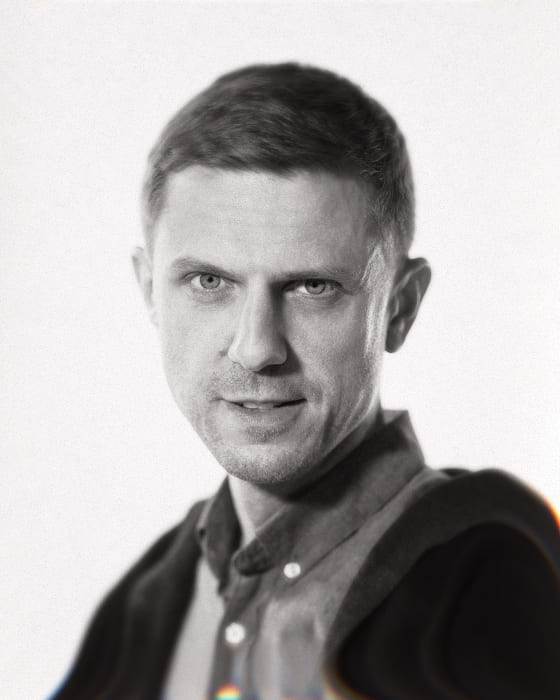
I'm a hands-on design leader who works across product and brand handling end-to-end craft. Currently, as CDO at Soramitsu, I lead the design function across consumer DeFi wallets, DEX platforms, institutional blockchain tools, government financial infrastructure, and telecom fraud intelligence, with products reaching users across the Americas, EMEA and APAC.
My work covers the full range: brand identity and naming, product design and UX strategy, design systems, visual comms, and the org work of building teams operating independently across different product contexts. I'm as comfortable defining the strategic direction for the user interface of a government payment system as I am hands-on crafting a brand identity from scratch.
Approach
My work starts always with listening. I want to hear from the founder, the team, the clients / community / users, anyone who knows the problems the best. Then I research and ideate and work with the team. Often the outcome turns out to be quite different from the initial expectations.
I work with deep empathy from all sides. The business side: what are we trying to do, what does success look like? The audience/user side: who is going to use this, what makes them trust and choose us? I'm constantly asking who needs to believe in our product/brand, and what would make them hesitate. Every person has a different threshold for trust and design has to meet them exactly where they are. This means understanding workflows along with cultural context and institutional expectations, and reasons why a single wrong visual or UX choice can break confidence.
Then I bring it all together by creating experiences that match how people really behave, across brand and product, web and mobile, motion and audio, design systems and team operations, content and PR. Wherever design has impact. A founder coming to me for a website can end up with a complete brand system.
Alongside design leadership, I'm hands-on when needed: front-end code, rapid AI-native prototyping to solve complex UX, writing content and copy, crafting animations, producing a launch video, or creating a brand from scratch. I don't think of these as separate jobs. They're all pieces of the same system to me and I have a wide range of experience to pull from to get things done, hands-on or delegated, with the utmost attention to detail and aesthetics throughout.
I build holistic systems that make things possible at scale: multi-brand design architectures, component libraries that work across consumer and enterprise products, and teams that can shift between polished mobile elegance and utilitarian data-dense dashboards.
Design Philosophy
Brand is strategy, not decoration
Brand design can drive outcomes that no amount of UX optimization alone could achieve. High-fidelity mockups can convince a decentralized community to fund a product's creation. A visual identity can turn a white-label tool into something major telcos are willing to partner on. Brand is part of the product. The products that succeed are the ones that understand this.
Generalist scope
I bring breadth with depth. Brand and product, web and mobile, motion and audio, design systems and team operations, code and UX, content and PR. These are the same problem at different scopes. A brand decision changes a product decision. A product decision changes a brand decision. Most of the value lives in the connections between disciplines, and those connections are easier to see when a design leader is able to efficiently move between them.
Depth through immersion
I'm a strong believer in self-learning. All things design, code, music production, languages, I've taught myself, mostly by immersion: surrounding myself with something until I understand it from the inside. It's also how I design for hard industries. You can't design a decentralized exchange or a central bank payment system or a fusion energy brand to feel and work right from the outside. You have to get in deep, learn how the domain actually works, and design from there. AI makes self-learning supercharged, since you can research and verify anything fast with confidence, immerse yourself and even create your own tools on the fly.
Systems scale, screens don't
Individual screens don't compound when you're managing multiple products across multiple markets. Systems do. I've built design systems and brand architectures that give every product its own identity while sharing a common foundation. Every new product starts at a higher baseline than the last.
Trust is contextual
The most important design problem to solve is trust. When a product handles something people care about (money, health, identity, education, or anything else with real stakes), every design decision either builds confidence or breaks it. A confusing flow, an ambiguous label, a visual identity that doesn't quite signal quality or the right feeling, and people are gone.
But trust depends entirely on context. In self-custodial crypto, making the product feel too familiar, too much like a banking app, creates a dangerous illusion. Users may think that there is somebody responsible for safekeeping their funds, ready to reverse a transaction or help when their seed phrase leaks. The same trap shows up elsewhere. A health product that treats a serious symptom too casually. A learning tool that hides how much practice the real goal takes. A dashboard that buries what happens when you click export. The design has to make people feel safe in the right places, and cautious in others.
Of course trust in design isn't only about making people feel safe. In complex products education has to live inside the product itself, as guidance at the exact moments where misunderstanding has consequences, rather than in a separate flow people may skip, often without even realizing.
Knowing when to hold the pen
For a design leader, the most important decision is about involvement. A good leader empowers through delegation and mentoring. But when the team is lean and the bar is high, sometimes the right move is to establish the standard, then hand it off. Knowing how to lead design at a high level with the simultaneous ability to run a healthy player-coach setup is something I've learned over the years.
Background
I've been working in design since the late 90s, starting in visual design and web dev, then moving through art director and creative director roles, managing projects and client relationships across many industries. The early days in advertising, marketing and design agencies gave me a thorough practical design education foundation and I spent my free time self-learning even more. I was also always close to software development through my father, so I developed a very broad range of skills. After the early years I became an independent design and brand consultant working with clients directly from hospitality, fashion, music, sports and wellness, and eventually various tech startups and fintech. My focus has landed on industries where the technology is complex and stakes are real with users ranging from first-time mobile payment adopters to DeFi degens to institutional compliance officers. Before joining Soramitsu full-time, I co-ran a boutique fintech and crypto advisory firm, which led to an engagement with Soramitsu that became a multi-year tenure as CDO.
At Soramitsu I built the design organization from scratch into two dedicated teams: a Product Design team (6 senior product designers) and a Brand Experience team (6 people spanning visual design, social media, marketing, growth, customer support, and content). The portfolio I've led spans consumer DeFi platforms used by hundreds of thousands worldwide, government financial systems serving millions, enterprise products trusted by global telecoms, and developer tools for the open-source blockchain community.
Beyond Design
Outside of work, I'm deeply interested in health, longevity, wellness, and sports. I've been an ultra marathon trail runner and cyclist for over a decade and prioritize physical fitness and wellbeing. I enjoy getting out in nature to explore our amazing home, planet Earth.
Music has been another constant throughout my life. I produced electronic music and performed as a DJ for over a decade (including producing a long-running weekly radio show), and will always continue to produce music as a creative outlet when I have free time. My audio production skills have proven useful in my design career, from creating audio for product and brand videos to sound effects for UI.
I'm also a keen traveler (26 countries and counting), now living in Asia, previously Europe (and US briefly), and working with teams across continents. I genuinely believe that decentralized technology will make the world more free, fair, and open.
At a Glance
Testimonials
“I really appreciate the professional work Tarmo has provided. We really do get good feedback from it!”
“Design is really important for how users experience software and especially their first impressions are what stick with users about an app or service. At Soramitsu, Tarmo always worked diligently on making sure that we could deliver the best design and experience possible for our users and that we had a unique and easy to understand visual language that our clients could easily recognize.”
“Tarmo has a deep understanding of how design can be used to help businesses create value, and how that value can delight customers. I appreciate how he built designs to help remove friction, and how it shaped the way people experienced and felt about our technology. This focus found success in many of our projects. Tarmo constantly innovates and this is something you want in any person on your team.”
“Tarmo's leadership style is a powerful blend of vision and empowerment. Tarmo would champion our needs fiercely to secure buy-in and resources, then give us the space to execute. He removed roadblocks without micromanaging, which created an environment where we could do our best work. His broad-scope, high-level guidance always kept us aligned without stifling creativity.”
What Motivates Me
What really motivates me is making meaningful things. Work that matters to the people who use it and improves their lives.
The projects I've been proudest of share that quality. Bakong, Cambodia's national digital currency infrastructure, brought real financial inclusion to millions in the country, including rural countryside. Liberty Fusion is building the commercial fusion reactors of tomorrow with the promise of delivering clean energy independence for humanity. Brand and product systems for technology I actually believe in. Decentralized money, clean energy, self-education.
If that sounds like the kind of thing you're building, let's talk.
Let's create something that matters
I work with companies navigating complex challenges and startups building from the ground up. Let's talk if that's where you are.